another short story from my travels, and much more.
You know when you start thinking about something, and then you start reading about it, and then it keeps coming up in conversation and you wonder, shit, is my world just becoming an echo chamber? well, the short stories from June continue and this time, it’s about a poster called The Echo Chamber.
Whenever I travel for a conference, I will always explore before and after the event – especially when I usually have to take 2-3 planes and spend ~ 26 hours in the air. After venturing through Finland and Germany earlier in the year, this was the perfect opportunity to see more of Scandinavia and I wasn’t going to let it escape me.
After what was already a huge week at the Cluster for Research in Coaching Conference (and many adventures the week before), we wanted to spend the weekend exploring the city. Being the nerds that we are, we took great care in reading every plaque of the Nobel Peace Centre. This is going to sound a little ridiculous, but the design of this museum was incredible, to the point that I am still thinking about it two months later! It was interactive in a way that felt wonderous, child-like, hopeful. But it still held space for some fascinating questions that have haunted me since, like the curious observation in how the winners of the Nobel Peace Prize shifted suddenly to people championing humanitarian and discrimination issues… during the Cold War. As one friend said: maybe it was easier to tackle discrimination than hidden nuclear weapons.
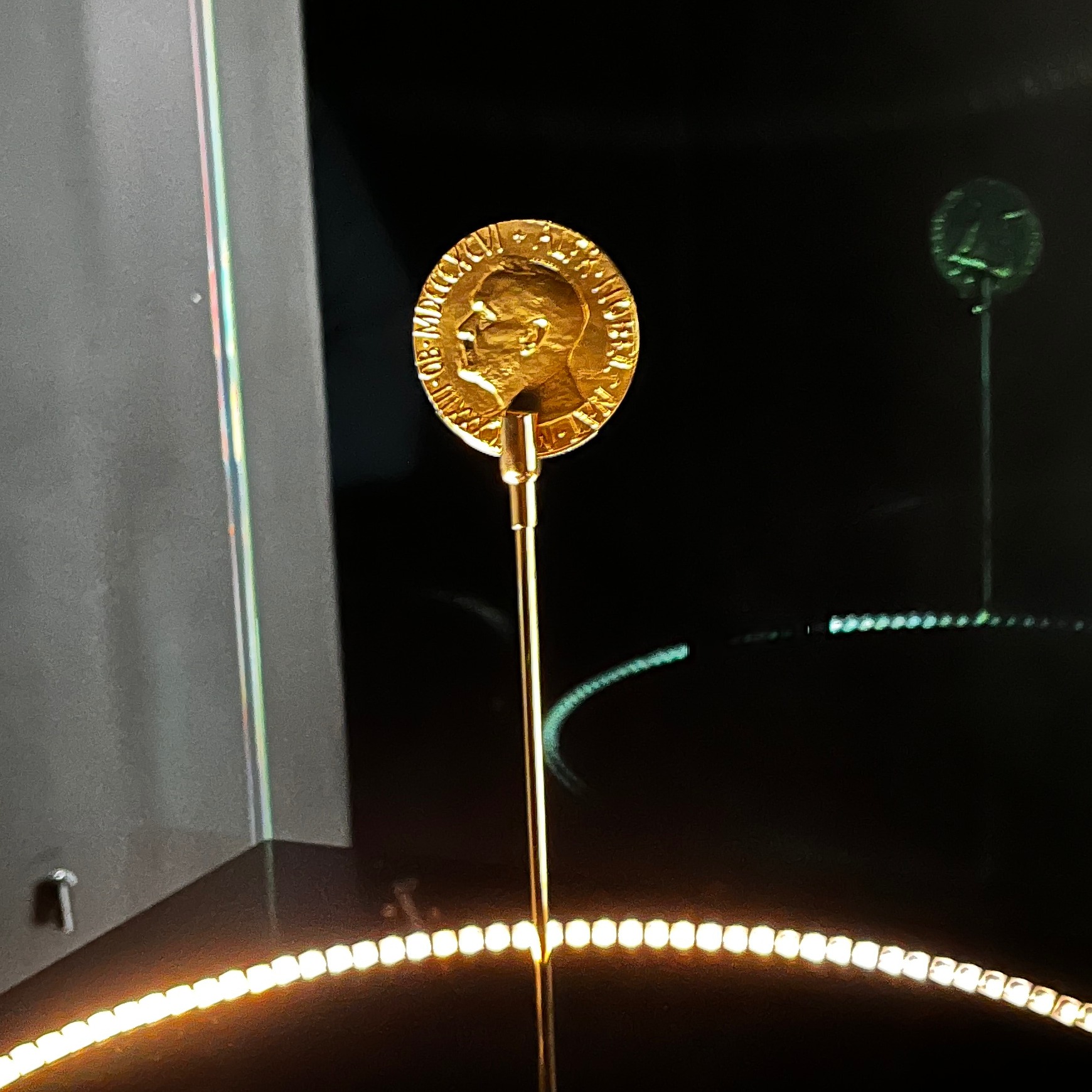
The information on the walls followed a timeline of the Prize with this playful little yellow light that would animate some images across the display. It was just enough to make you feel like you were actively venturing along, and it made me wonder how else we can use such simple interactions to make sharing knowledge about topics feel so much more involved. There was even a little quiz at the end where you could find out your ‘peace personality’ and you know it had to be engaging and cute for me to not immediately hate it, as i do with most pseudopsychometric tests. For anyone playing along at home, i was an ‘innovator’.

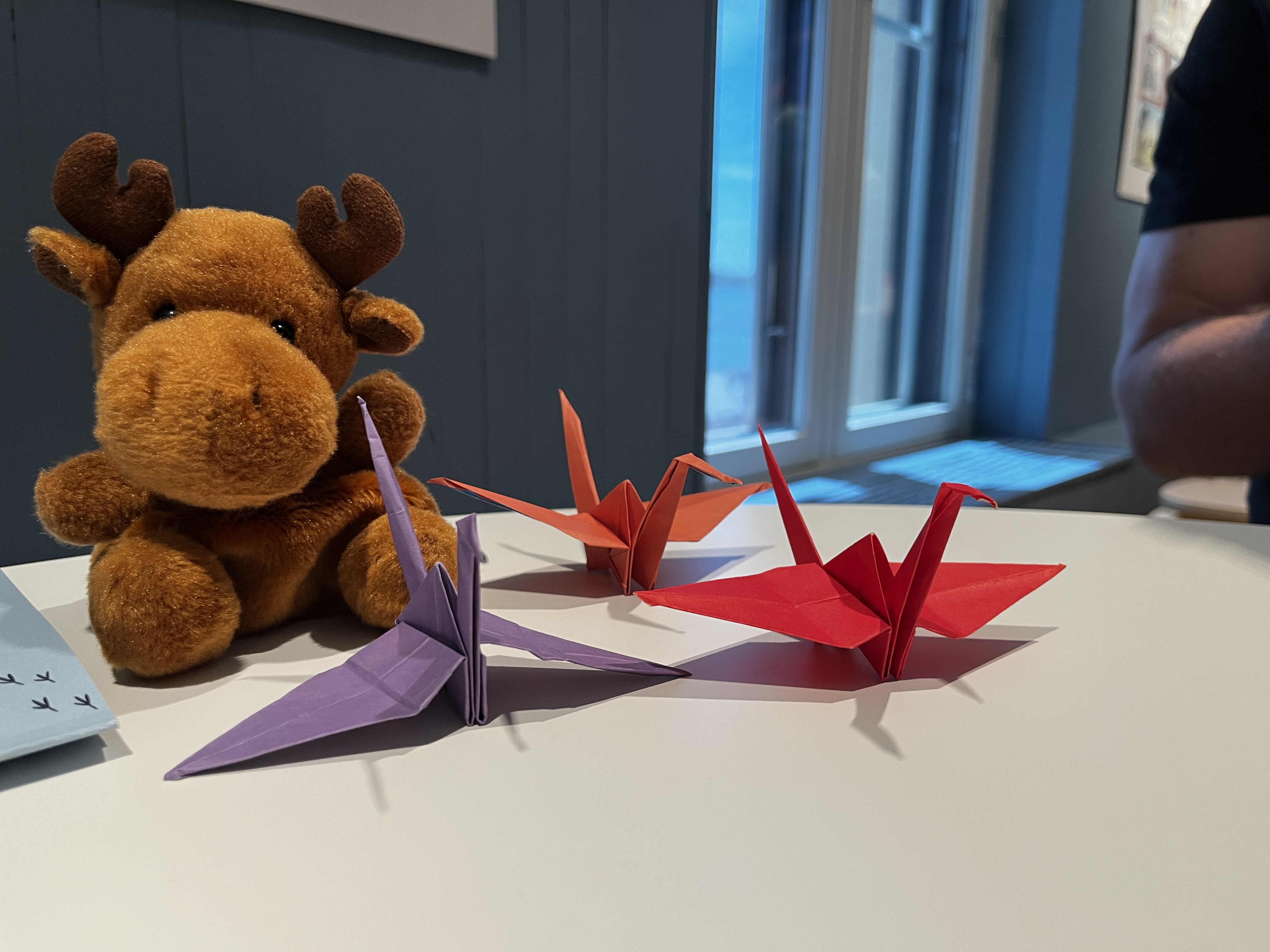
We spent over an hour wandering the halls of this museum and i love that there was absolutely no rush. There were many ways to interact with the exhibits and they were thoughtfully designed. I love that everywhere i go, i’m noticing the way the world invites me to interact with it, from simple little mirrors within an activity to the chance to add something to a display that will hang there indefinitely, throwing it a little out of balance, doing my part to contribute to the growth of that particular part of the museum. We even stopped to (painfully) make origami cranes, which took us way longer than it should have and required us to keep rewinding the YouTube video so we could get the folds right haha how many scientists does it take to fold a crane? More than 3…
I think the thing that stays with me the most about this incredible space is the way the depth and importance of the topics were so carefully crafted that they linger on your mind. There was a tearaway activity where you could keep a sheet of paper with a reminder on it, and it lives on my desk at home. I read the stories of people who survived the nuclear bombs in Japan during the World War and as I looked up from the heartbreaking magazine, worn at the edges from the many hands that had held this same copy, flipping slowly through, tear-stained and lovingly carried, was a note on the wall: bear witness.
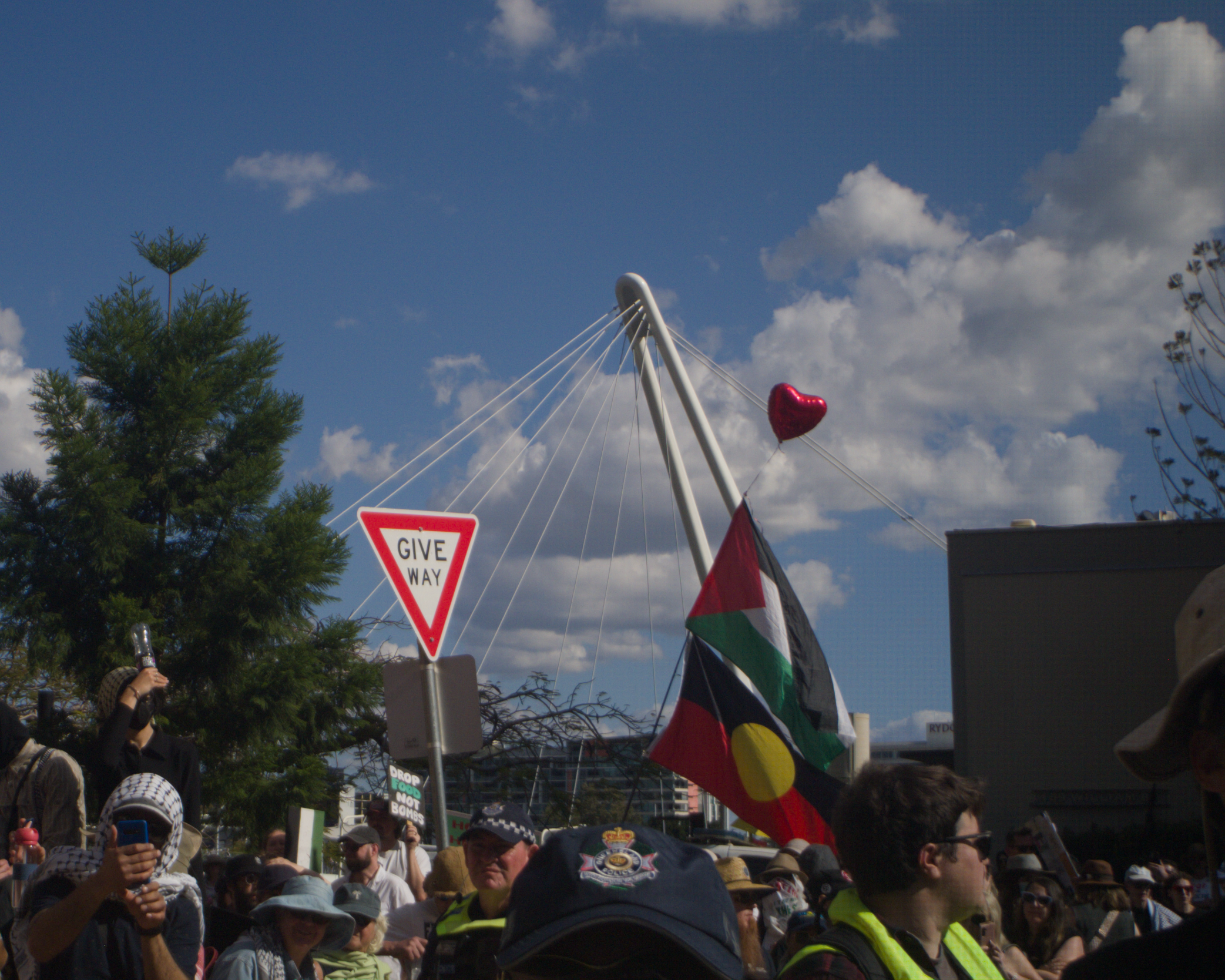
I’ve been thinking a lot about how these stories weave through past, present and future, and I was reminded of the Indigenous concept of everywhen, where past, present and future are indistinguishably interconnected. This moment, in a museum two months ago, was alive again as I stood in the streets of Brisbane city with ~30,000 other people bearing witness to something that is genuinely happening in my lifetime. Sure, it’s easy to say the World Wars are in the past, but they cannot be, and never will be, when we are currently witnessing the same behaviours in real time, but now with infinitely less of the outrage or action to stop it. So i chose to bear witness again, because it’s the least i can do.

It is so easy to distance ourselves from the world and we’ve found outstanding ways to do so in the refuge of our technology. This is more than the ‘blame it on the phones’. It’s about this very subtle forgetting of why we are here, of what we can do, of the point of education in the first place, of who it serves to work ourselves to the bone. I will talk about the poster in a second, but the reason why ‘the echo chamber’ lives on in my mind is because it serves as a reminder to get the fuck out. We can get so lost in what we are supposed to be doing, in the curated version of the world that is served to us on a silver platter, in the palm of our hands, and we uncritically receive it. Or worse, we seek it out. We defer our own thinking~feeling minds~bodies to large language models as if they can ever understand the depth of why we are seeking knowledge in the first place.
Two quotes come to mind from a paper that my friend shared with me lately:
reading is a political act.
the duty of education is to resist.
The juxtaposition of the below instagram reel is intentional here, but it serves as a reminder that our sources of media are not inherently good or bad, nothing is. Rather, what we engage in, what we pay our attention to is a commodity in itself, and it is worth reminding you that you can choose where to put it.
It’s funny how one prompt can help us distill our thoughts in a way that could not have emerged until it was asked. Recently, it was the counter-question to one that I always ask others to encourage big talk (as opposed to small talk): what’s on your mind? He asked me go deep this time.
Be careful what you wish for. I sent the below response:
i’ve been thinking about the interplay of care, capitalism, activism and hyper-productivity. Super fun venn diagram to be in the middle of. it’s a conversation that has come up independently with several friends that I love around this feeling that you need to optimise your time, to be productive, to always be working towards doing something for somebody else, to contribute to the economy etc. and I think because that feeling is weighing people down, we have become blind to the reason why other socio-political forces want that – which is to distract us from things that bring us meaning, bring us hope, and bring us together.
So how is this all connected? Well, while we were exiting the museum, there was one more section in this dark space in-between the entry and exit. The dim lighting definitely didn’t make it the most inviting space but my curiosity got the better of me and i ventured around the corner. I am infinitely glad i did because this particular exhibition has changed the trajectory of my life.
This exhibition was designed as “three different themes [to] illustrate the complexity of human perception.” Now, as someone who works with perception-action coupling as a central tenet of their theoretical framework and goes to sociology-coded conferences for fun, you bet i was over the moon to read this. I stayed so long in this particular exhibition that all my friends were waiting in the giftshop, wondering how on earth i could get so lost within the same building as them. I remember being absolutely floored by this line:
Here you will neither find answers to the big questions, nor a shimmering utopia. Here is an exploration of the power of perception where a shift in our own perspectives could open new paths to a brighter future.
This connects back to the paper i mentioned before, titled ‘the future of education in an impulse society’. I am in the process of writing a very detailed, emotional correspondence with the paper, but Gert Biesta also speaks about the risk of saying that the future is this unknowable, dynamic thing that cannot possibly be contributed to or influenced in any way… “to say that these changes happen and that we need to adapt very quickly is to forget in whose interests these changes happen.”
Hence my pondering about why some people i love are falling incredibly sick within 12 hours of feeling perfectly fine because their stress is inescapable, booking work meetings during their leave, considering whether this will look good on their CV as the first question rather than will this bring me joy or fill my heart, that me sitting still at my desk feels like a waste of time. What a terrifyingly fascinating prospect. How on earth did we get here?
We know that core human challenges about sustainability, democracy, peace, and care will not go away because they are aspects of the human condition. […] it comes back to the question of whether indeed our task as human beings is to flexibly move with everything that happens, or whether the situations we find ourselves in require that we resist, that we say ‘no’.”
When was the last time you had the capacity to think about any of these things?
Why is that?
The echo chamber that i’m in at the moment is thankfully filled with people who are starting to ask questions like these, who are challenging me from further along their journey of exploring where unwritten futures can go not because we are going to be the reason why they exist, but rather to remove ourselves and our self-obsession with thinking that we can be the answer from the equation. Take action, yes. Throw your glass of water on the wildfire (figuratively only please), but you still have to fill it up again. And we can do that by being imaginative, by resisting.

There is one more incredulous part to this story.
I remember standing in this room and seeing the little maze first, so I wander up to it and take it all in. Then, I look up and notice that the photograph on the wall is actually a photo of this diorama maze. Oh shit! and THEN i turn to see the room next to it, with the same ladder and wallpaper… I was dizzy. I imagine that’s what it feels like to use the transporter in Star Trek. Beam me up Scotty, I am out of here.
The fact that a curated space can make me feel THAT MUCH is incredible. I left the room slowly, carefully, thoughtfully, wondering how on earth I could reconcile what I had just been through by simply walking through a photography exhibit. At least I could talk about it with my friends!
…
Nope. I walked outside to ask how they found the last exhibit on perception, and they looked at me like I had absolutely lost my marbles. What exhibit? They had just walked out of the museum, right past it. We were standing in the gorgeous sunshine of an Oslo summer, with the ferries of Akers Brygge behind us and the fjord stretching off into the distance, and I was questioning whether or not that entire experience was even real.
It gets weirder.
The following day, I catch an overnight bus to Stockholm, and there are even more museums there. So I endeavour to go to as many as I can, following this thread of curation and sharing information in embodied ways. The last museum I go to is Fotografiska, which you may recognise from the link under the above photograph I took of The Echo Chamber while in Oslo. The little deal I used to book the museum means that I get 50% a poster so I think, why not. It’s a photography museum, there’s bound to be something in here that i would love to take home with me.
I am 529km away from the Nobel Peace Centre at this point. This is important context.
I am flicking through the catalogue of potential posters and i notice a vaguely familiar name in Erik Johansson, so i scroll to their portfolio and click on the first poster i can find.
The Echo Chamber appears.
And i buy it immediately.
I fly the 26 hours home.
I bring it to my desk at work.
And i pin it up.
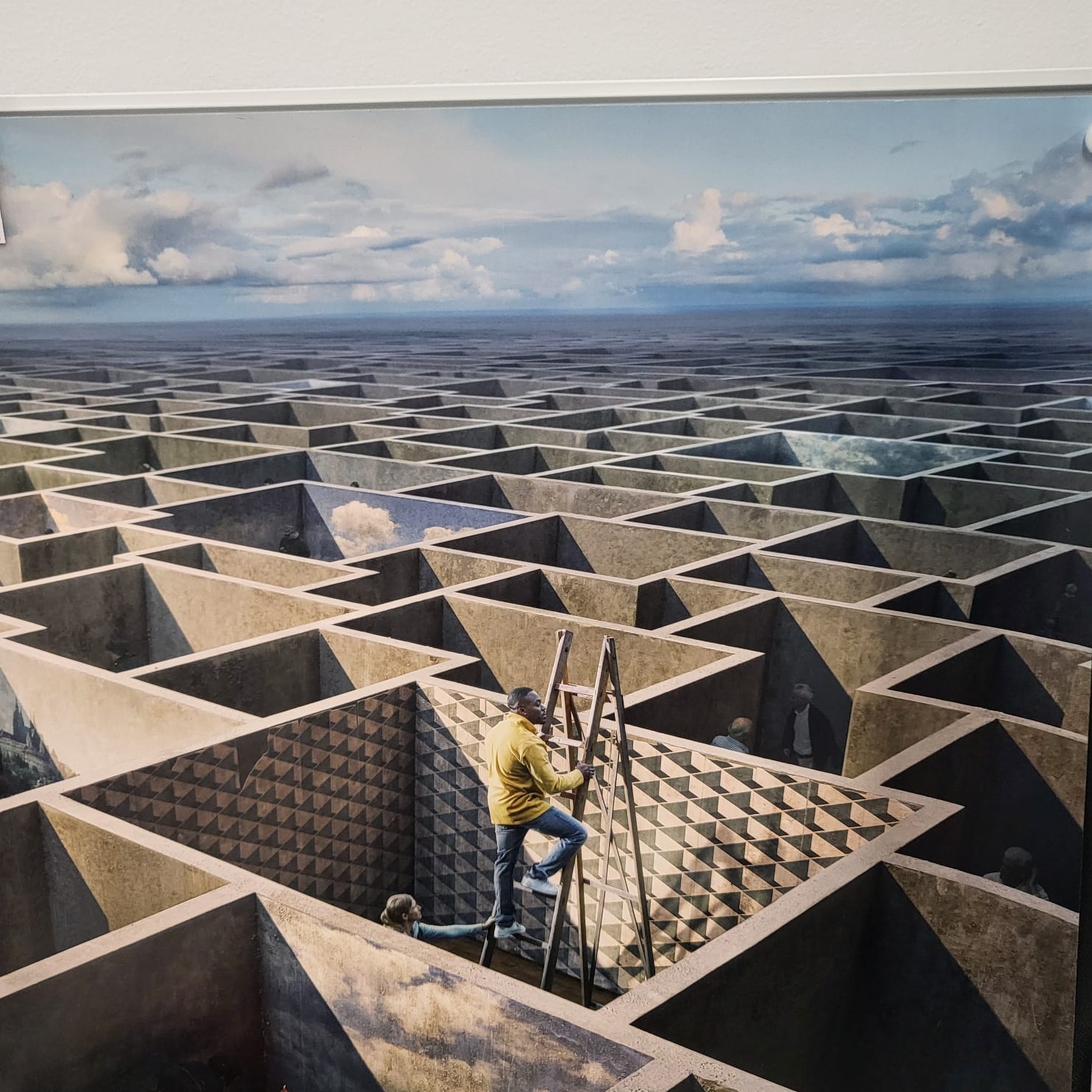
At last, i will leave you with this quote from Erik himself about the exhibition, in the hopes that together, we can create the presently unimaginable.
We can use the unwritten future as a tool to decode, un- and re-learn behaviors and biases, and confront our limited perception of the world. We cannot create what we cannot imagine. We risk reproducing only the presently imaginable, when what we want, and need, is the presently unimaginable.
 asl
asl 
Leave a comment